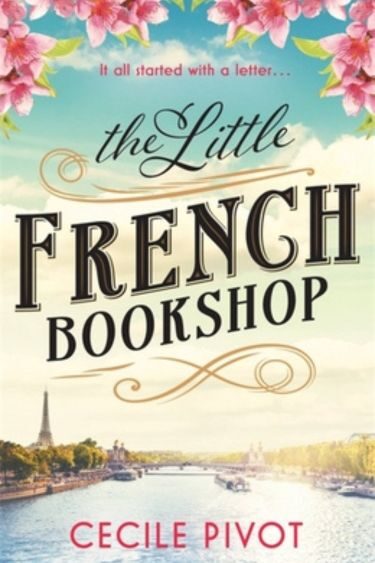

The Little French Bookshop by Cécile Pivot
Genres: Historical Fiction, Thriller
A letter writing workshop.
Five strangers.
Countless secrets bursting in between the pages.When French bookseller Esther loses her father, she decides to place an ad in a newspaper, inviting struggling readers to join her secret letter writing workshop.
To Esther's surprise, applications pile in by the dozens - and before long, an elderly lady, a disillusioned businessman, a disheartened couple and an awkward teenager find themselves sharing stories, seeking advice, and forging new friendships.
As Esther's students uncover the hopes, dreams and fears that were hiding behind the pen, Esther, too, finds herself thrown into a new world full of unexpected adventures.



I received this book for free from in exchange for an honest review. This does not affect my opinion of the book or the content of my review.
Review
I really wanted to love this book. As soon as I saw the premise—a bookshop owner starting a letter-writing workshop to bring people together—I thought it sounded like the perfect cozy, heartfelt read. The idea of finding community through letters, especially after loss, is such a beautiful one. Unfortunately, while the concept is wonderful, the execution fell a little flat for me.
Esther, the bookshop owner, is grieving the loss of her father and missing the comfort of their written correspondence. To fill that void, she places an ad in the paper and invites others to join her in rediscovering the art of letter writing. The first assignment—asking each participant to write about “What battles are you fighting?”—has so much potential for honesty and emotional resonance.
Five people answer the ad, each carrying their own burdens. I wanted to connect with them, to be moved by their letters and stories, but something about their portrayals kept me at arm’s length. The characters never quite came alive for me in the way I hoped, and I found myself wishing for more depth or spark to make their personal struggles truly resonate.
The two exceptions were Samuel, a teenage boy whose vulnerability and honesty felt real and touching, and Jean, an elderly woman whose gentle wisdom added warmth to the group. Their letters had the most heart, and I found myself looking forward to their sections the most.
Another surprise was that the bookshop—something I thought would be central—barely features at all. Given how much the title emphasizes it, I expected the setting to feel like another character, a comforting haven that tied everything together. Instead, it’s more of a background detail.
That said, I did enjoy the overall tone of the book. It’s reflective, quiet, and filled with moments that remind readers of the power of small acts of communication. It just never quite built the emotional connection or sense of intimacy I associate with great epistolary fiction.
While this one didn’t capture me fully, I appreciate what the author was trying to do—celebrate the lost art of letter writing and the courage it takes to be honest on paper. It’s a thoughtful concept, and for readers who enjoy slow, contemplative stories about human connection, this may still be worth a try.
Meet the Author



Leave a Reply